http://www.aish.com/ho/o/48959726.html THE GHETTOES


GERMAN'S CHILDREN'S BOOK STRORY ABOUT THE JEWS AND THE LORD CHRIST Background: This story comes from Der Giftpilz, an anti-Semitic children’s book published by Julius Streicher, the publisher of Der Stürmer. He was executed as a war criminal in 1946. This summary and partial translation is taken from a 1938 publication issued by the “Friends of Europe” in London, an organization to which I have not been able to find a successor to request permission to reprint. -------------------------------------------------------------------------------- What Christ Said about the Jews -------------------------------------------------------------------------------- A peasant mother returning from field-work, with her three children, pauses before a way-side Christ. The mother talks to them about the wickedness of the Jews. “She points to the Cross, which stands by the road: “Children, look there! The Man who hangs on the Cross was one of the greatest enemies of the Jews of all time. He knew the Jews in all their corruption and meanness. Once He drove the Jews out with a whip, because they were carrying on their money-dealings in the Church. He called the Jews: killers of men from the beginning. By that He meant that the Jews in all times have been murderers. He said further to the Jews: Your father is the Devil! Do you know, children, what that means? It means that the Jews descend from the Devil. And because they descend from the Devil they can but live like devils. So they commit one crime after another.” The children look thoughtfully at the Cross. Mother continues: “Because this Man knew the Jews, because He proclaimed the truth to the world, he had to die. Hence the Jews murdered Him. They drove nails through His hands and feet and let Him slowly bleed. In such a horrible way the Jews took their revenge. And in a similar way they have killed many others who had the courage to tell the truth about the Jews. Always remember these things, children. When you see the Cross, think of the terrible murder by the Jews on Golgotha. Remember that the Jews are children of the Devil and human murderers. Remember the saying: As long as Jews have been on earth There have been enemies of the Jews. They gave warning of the Jewish blood And even sacrificed their blood, So that the world might know the Devil And not plunge into ruin; So that the world might soon be freed From its slavery to the Jew.”
THE GHETTOS The most famous was the Warsaw Ghetto. Warsaw was a city in which the 335,000 Jews represented about one third of the population. Click to Enlarge Warsaw Ghetto, 1940 photo courtesy of Yad Vashem More Jews were herded into Warsaw, so the Jewish population rose to about 450,000. These Jews were thrown into the slum area of town, 2.3% of the city area, and walled off. Click to Enlarge Starvation in Warsaw Ghetto photo courtesy of Yad Vashem Read a personal account. There was no sanitation. Pestilence would sweep through. Click here to receive Aish.com's free weekly email. Life in the ghetto was intolerable. Child On A Ghetto Street photo courtesy of Yad Vashem If a person was not fit for work, then he did not get food tickets. That meant death by starvation. Click to Enlarge Being Taking To The Hospital photo courtesy of Yad Vashem Over 75,000 people died of disease and starvation. The Jews of the ghetto had no idea what the Germans had in mind. At first, they thought the Nazis were trying to starve them to death or kill them off with plagues. Click to Enlarge Standing In Line For Deportation photo courtesy of Yad Vashem Click to Enlarge Hungry Child In Ghetto photo courtesy of Yad Vashem The ghettos were run by Jewish councils, (Judenrat) who were responsible for carrying out Nazi orders. Read a personal account. The transports bound for Auschwitz and other concentration camps would come, and the Nazis would ask for 1,000 Jews. The Council's rationalization was, "If we did not send off the one thousand, they would ask for two thousand." In fact, not only the one thousand went, but the two thousand went, too. And not only the two thousand, but the council members went and their entire families went also.In the end, everyone from the ghettos was swept away. Click to Enlarge Moving Into The Lodz Ghetto photo courtesy of Yad Vashem Read a personal account. It must be noted that in spite of the unbelievable ghetto conditions, Jewish life – to the extent that it could – went on. The Torah studies, circumcision, Shabbos and holiday observance – all still went on, in spite of the fact that getting caught could mean death. Click to Enlarge
http://www.aish.com/ho/o/70446272.html#6
REACTION OF JEWS IN POLAND Even though the Jewish newspapers carried articles about Hitler and the Nazis, and even though we heard Hitler's hate-filled speeches on the radio in the town café, much of what we read and heard was met with a kind of numb disbelief. Then too, hadn't we heard this sort of hate speech for hundreds of years? After a period of persecution, things always seemed to have returned to a workable calm. We reacted to Hitler's propaganda, therefore, with a strange mix of concern and indifference. He seemed to us a deranged man in the neighboring country who would not last long. If only Jews in Chorostkow had known what was to befall us within the next few years, I am sure we would have worked much harder at getting out of Poland and into Israel. -------------------------------------------------------------------------------- EXPERIENCE WITH GENTILES IN POLAND Overall, even though there was a long history of anti-Semitism in the Ukraine, and occasionally we could feel its undercurrent, for the most part the residents of Chorostkow, Jew and Gentile, merchant and farmer, lived and worked together on good terms. There may not have been intensive socializing, and certainly inter-faith marriages were almost unheard of, but the communities were friendly.... For the sake of business and in the name of human decency, everyone made sure to go out of his way not to hurt one another. Of course, all this changed. Judging by our lives before the war, I could never have predicted the hatred and sadism that was directed toward the Jewish community by some Gentile neighbors. A very small number did risk their lives to save Jewish friends. But were it not for such Poles - unfortunately, a very tiny percentage of the population - I, my brother, my wife, and countless others would not be alive today to tell the story of what happened. Very few righteous Gentiles risked their lives and the lives of their children to hide Jews, and unlike Oskar Schindler, most of them have not become famous for the good deeds. They remain unknown except to those Jews who owe them their lives. -------------------------------------------------------------------------------- WHEN THE GERMANS ENTERED THE TOWN The atrocities began immediately after the Germans arrived in town, when thirty-four innocent Jewish residents were brutally murdered. Randomly, the German SS looked for excuses to kill Jews. The SS asked one Gentile to show them where Jews lived. He pointed to Itzhak Goldfliess's house. The SS walked into the home of my friend and killed his parents, wife, and two children, a little boy and girl. Itzhak happened to be away from home at the time and survived the slaughter. He managed to live through the entire war, surviving even Kamionka, and afterward made his way to America. He remarried, had a daughter and later on, grandchildren. On the first Sabbath of the occupation, the Germans gathered all the Jews and ordered us to dig a wide, deep trench near the town hall. Next, they ordered us to bring bucket loads of excrement and sewage water from the public bathrooms to fill the trenches. We were then told to go home and dress in our Sabbath finery and ordered to show up again at noon to hear a speech by a local Gestapo officer who was going to outline what was expected of us and how we were to behave toward the German authorities and among ourselves. The Germans were fond of laws and regulations for policing Jewish lives.
Unlike most of Chorostkow's Jews, my mother suggested that our family not respond as ordered. Instead, she told us to go into the attic, and there we watched everyone else return punctually at noon, trying to appease the new rulers. To everyone's amazement, the Jews were told to stand in the excrement-filled trenches. Many Ukrainian townsfolk gathered to watch this humiliating spectacle and rejoiced wholeheartedly. On the other hand, the deputy mayor of the town, Vasilenko, himself a Ukrainian, protested this barbarism and resigned his post. However, most of the Ukrainians and Poles willingly helped the Germans persecute and ultimately exterminate the Jewish community. The Jews were forced to remain in the sewage pits all day long. The Germans beat them with sticks and stepped back to allow the Ukrainians an opportunity to lash out with pitchforks, shovels, and clubs. Whenever someone tried to scramble out of the pit, he was immediately beaten back and knocked down by the assembly of German SS officers and Ukrainian civilians. This was our introduction to the German reign of terror in Chorostkow. Each day brought new tortures, atrocities, and killings. Within a month or so, the Germans ordered us to organize a Judenrat (Jewish council) that would run our affairs according to German orders. The Judenrat would also create strife by pitting Jew against Jew and thus weaken the community. At first, the Nazis ordered us to hand over all gold and jewels to the Judenrat. The head of every household gathered together the family jewelry, keeping aside as much as he dared, and delivered it to the Judenrat's office. They then organized it, keeping a careful accounting before delivering it to the German masters. Later on, the Jew of Chorostkow had to hand over silver, jewelry, and religious ritual objects, furs, and art. Every day the Germans came up with additional demands: linens, shirts, carpets. The Judenrat administered all commands. They had no choice but to fulfill German orders since the alternative would have been fatal. About three weeks after the German arrival, all Jews over the age of ten were ordered to wear white arm bands with a blue Star of David. We cut up sheets and white tablecloths for the arm bands and usually used blue writing ink to draw the stars. This shocking sign reinforced that we were going to be singled out at all times, never allowed to forget how much we were hated. Ukrainians, who detested Jews, suddenly began to act superior whenever they encountered a Jew with an arm band in the street. And when German soldiers were passed, anything from a tug of the beard to a kick in the kidneys was possible.
The contrast then was tremendous when Jan Gorniak, a Polish farmer with whom my family had done business over the years and whose mother, Tatyana, had gone to school with my mother, arrived at our doorstep at six o'clock with a sack of a hundred kilos of flour. "I don't know what will be," Jan said to us. "I don't know if the Germans will let me into the ghetto again. Take this flour. It will help you in the days to come." We thanked Jan profusely since we too did not know what the future would bring and how much more restricted our access of food would become under German rule. In addition to collecting valuables, the Judenrat had to fill quotas for workers at various hard labor tasks, such as snow removal, field work, and sanitation duty. The main objective of the Germans was to humiliate the people while they worked and to make them open targets for vicious beatings. A popular way to demean our young women was to force them to clean public toilets and animal stables. I myself spent many days doing this kind of hard labor, mostly on the farm, but since I was young and strong, I was able to endure. Not everyone could. Every day, several would fail to keep up with the pace, and they were beaten and often shot. Soon the Germans ordered the Judenrat to compile a list of two hundred able bodied young men to undertake "special tasks," a euphemism for almost unbearable physical labor with little food under inhumane conditions. No one wanted to enlist for such work, and everyone tried to bribe his way out of it. Bribing often meant the difference between life and death. The men who were not so fortunate and worked in the special tasks division built and were eventually housed in a labor camp fifty kilometers outside of town. It was called Stupka and was only one of hundreds of labor camps the Germans set up in the early stages of the war.
They were used to incarcerate and work to death Jews, Russians, and other political prisoners. Compared to the horrible death factories like Auschwitz, Majdanek, Treblinka and Belzec, the smaller labor camps - like Kamionka and Stupka - may have caused more prolonged suffering; proportionally, more people died in the small labor camps. In a labor camp, life was a constant nightmare of grueling work and brutality. It was only a matter of time before one could no longer go on.
Some sixteen thousand people lived and worked in Kamionka, the labor camp to which I was eventually sent, during the German occupation. Of these, only thirty six survived the war. __________________________________________________________________________________________________________________________________________________________________________ GETTING PAPERS Rabbi Eliyahu Ellis: My dad told me a story once. He was a young man living in Germany at the time, and he worked in a big department store. He said that one day he was working late, and the boss told him to stay overtime. Everyone went home, and my dad and his boss were the only ones left in the store. And then the boss said, "Pull down all the shutters, let’s black-out the store." So they did. He waited a couple of hours after dark. Up pulled an S.S. command car, and out popped, very quickly, an S.S. general and his wife. They ran into the store, and my dad’s boss closed and locked the door. What was going on? When my dad was young, he was an athlete. He was a very, very good soccer player on the regional soccer team. Apparently, the S.S. general had seen him play one time, and really admired my dad. So, while his wife was shopping around in the store, he wanted to chat with my dad. So my dad asked him, "Please, Mr. General, what in the world are you doing, coming here to shop?" So the general said, "I like to come to Jewish stores because I know I’m going to get a good deal." It was a crazy time! In fact, it’s a good thing that this connection was made, because my dad actually got out of Germany through him. It was very hard to get out during those later years. But he finally found a route out. However, there was a problem: My dad’s papers were held up somewhere, he just couldn’t get them. So he asked his boss if he could approach the S.S. general, maybe get some "protectzia," and the boss said, "Fine." So my dad went up to the fellow, and he said, "Can you help me out?" The S.S. general said, "Don’t worry, you’re under my personal protection." My dad thanked him very much, but said, "I think I should leave," and this general agreed. A day later, his papers showed up. __________________________________________________________________________________________________________________________________________________________________________ HOW TO TELL A JEW Things are lively in Mr. Birkmann's 7th grade boys' class today. The teacher is talking about the Jews. Mr. Birkmann has drawn pictures of Jews on the blackboard. The boys are fascinated. Even the laziest of them, "Emil the Snorer," is paying attention, not sleeping, as he so often does during other subjects. Mr. Birkmann is a good teacher. All the children like him. They are happiest when he talks about the Jews. Mr. Birkmann can do that well. He learned about the Jews from life. He knows how to put it in gripping terms such that the favorite hour of the day is the "Jewish hour." Mr. Birkmann looks at the clock. "It is noon," he says. "We should summarize what we have learned in the past hour. What have we talked about?" All the children raise their hands. The teacher calls on Karl Scholz, a small lad in the front row. "We have talked about how to recognize the Jews." "Good. Say more!" Little Karl reaches for the pointer, steps up to the board and points at the drawings. "One can most easily tell a Jew by his nose. The Jewish nose is bent at its point. It looks like the number six. We call it the Jewish six. Many non-Jews also have bent noses. But their noses bend upwards, not downwards. Such a nose is a hook nose or an eagle nose. It is not at all like a Jewish nose." "Right!" says the teacher. "But the nose is not the only way to recognize a Jew..." The boy goes on. "One can also recognize a Jew by his lips. His lips are usually puffy. The lower lip often protrudes. The eyes are different too. The eyelids are mostly thicker and more fleshy than ours. The Jewish look is wary and piercing. One can tell from his eyes that is is a deceitful person." The teacher calls on another lad. He is Fritz Müller, and is the best in the class. He goes to the board and says: "Jews are usually small to mid-sized. They have short legs. Their arms are often very short too. Many Jews are bow-legged and flat-footed. They often have a low, slanting forehead, a receding forehead. Many criminals have such a receding forehead. The Jews are criminals too. Their hair is usually dark and often curly like a Negro's. Their ears are very large, and they look like the handles of a coffee cup." The teacher turns to the students. "Pay attention, children. Why does Fritz always say 'many Jews have bow legs', or 'they often have receding foreheads,' or 'their hair is usually dark'?" Heinrich Schmidt, a large, strong boy in the last row speaks. "Every Jew does not have these characteristics. Some do not have a proper Jewish nose, but real Jewish ears. Some do not have flat feet, but real Jewish eyes. Some Jews cannot be recognized at first glance. There are even some Jews with blond hair. If we want to be sure to recognize Jews, we must look carefully. But when one looks carefully, one can always tell it is a Jew." "Very good," the teacher says. "And now tell me about other ways to tell Jews from non-Jews. Richard, come up here!" Richard Krause, a smiling blond lad, goes to the board. He says: "One can recognize a Jew from his movements andbehavior. The Jew moves his head back and forth. His gait is shuffling and unsteady. The Jew moves his hands when he talks. He 'jabbers.' His voice is often odd. He talks through his nose. Jews often have an unpleasant sweetish odor. If you have a good nose, you can smell the Jews." The teacher is satisfied "That's how it is, kids. You have paid attention! If you pay attention outside school and keep your eyes open, you won't be fooled by the Jews." The teacher goes to the lectern and turns the board. On the other side a poem is written. The children read it out loud: "From a Jew's face The wicked Devil speaks to us, The Devil who, in every country, Is known as an evil plague. Would we from the Jew be free, Again be cheeful and happy, Then must youth fight with us To get rid of the Jewish Devil." from: http://www.calvin.edu/academic/cas/gpa/story3.htm This story comes from Der Giftpilz, an anti-Semitic children's book published by Julius Streicher, the publisher of Der Stürmer. He was executed as a war criminal in 1946. Translation copyright © 1999 by Randall Bytwerk ____________________________________________________________________________________ THE FATE OF THE JEWS OF TREMBOWLA On April 7, 1943, about six months after my father had been taken away and murdered at Belzec, the Germans did enter Trembowla and, together with the Ukrainian police, surrounded the city. It was early morning, and nobody knew what was about to happen. Was it going to be city-wide Aktion or only a smaller roundup? Everyone who could, escaped into hiding. Some wanted to run to the nearby forests but were prevented from doing so by soldiers and policemen stationed all around the city. Arie went into a bunker with about forty or fifty people; thank G-d, they were never discovered by the Germans. My mother, of blessed memory, refused to go underground, and at fifty-four years of age, she would not even consider trying to survive in the forest. So she, along with about 1,100 Jews that included my aunts, uncles, and cousins, was rounded up. The Germans decided that transporting this group to Belzec would be too costly. Instead, 1,100 people were ordered to undress and then, in underwear, were marched through the city of Trembowla to a little village called Plebanowka, about two kilometers outside the city limits. My mother had a heavy gold chain and some money with her. She gave these valuables to my little cousin, Herzale, who was about seven years old. When the group passed a small bridge, she told Herzale to hide underneath, instructing him to wait until dark and then find Arie back in Trembowla and give him the packet of money. Herzale did just as he was told and managed to survive until two months before liberation when Anna Bartestka, a woman in town, betrayed his whereabouts for five kilos of sugar. Ditches had already been dug for the Jews from the Trembowla ghetto. The group was lined up at the edge of the ditches, and each received one bullet apiece before falling into the grave. The soldiers were instructed not to waste any more bullets. A Jew, they were told, was not worth two or three bullets. As a result, some people were not dead when they fell into the ditches. The Germans covered the corpses with dirt. When I came back after liberation, the local Ukrainian peasants told me that for days they could see the earth moving in this mass grave since many of the Jews had been buried alive. Some of these poor souls may have clawed their way out, but the local residents did not lift a finger to help them; indeed, they may well have finished off any who did manage to escape from the mound of corpses. A day after the massacre, a young woman from Plebanowka, Nusia Grossberg, who was nineteen years old, came to the site of the mass grave and sat beside it crying all night. Her mother, three sisters, and little brother had been killed and were among the pile of corpses. Nusia wept as the mass grave moved up and down, not caring if the Nazis found her. She, too, wanted to die. In the morning, a peasant woman taking her cows to pasture found the young woman sobbing by the graveside. "Run away," the peasant told her. "There's nothing you can do for them. Save yourself. You're young. You can live." After protesting, Nusia did run away. Today, she lives in Brooklyn with her two children and grandchildren. The final liquidation of the ghetto in Trembowla took place in July 1943. After the liberation, only fifty or sixty people from the entire community had survived. And so our beloved mother was also gone. My mother who had lived only for her family, who worked so hard alongside my father in the store, who would have walked to the ends of the earth to save her children, was no longer with us. I had not even finished saying Kaddish for my father when I had to begin praying for my mother. Now, only Arie and I were left. And who knew for how much longer. __________________________________________________________________________________ SRULIK AND THE TORAH SCROLLS An area of the square was designated as the gathering point for the booty. There were already a few Torah scrolls there, some shining in beautifully embroidered white silk, others clothed in gold or purple velvet embellished with golden thread, others still adorned with silver crowns. There they lay, their majesty and glory still evident, among the other objects stolen from the shuls of Miodowa Street. Now they dragged out little Yisrael, Srulik the barber.... "Come on, verfluchter Jude! Dirty Jew!" they screamed. "Hurry up, you lazy swine, there's a lot of work to do. Gather all the silver and gold in one pile, the candelabra and candlesticks in another.... Now put all the crowns in another pile." Srulik obeyed. "Now undress those fancy scrolls. We can use the silk and velvet...." Now what did they want of him? "Are you dreaming, you filthy Jew? Didn't you hear me?" the brute yelled. "Undress your holy scrolls." Yisrael stooped and picked up the one with the white silk mantle, prostrate in the dust, still dressed with majesty and glory for the High Holidays. He lifted the Torah to his heart, hands shaking, heart pounding: now she is all mine. He hugged her with all his strength, kissing her with awe and love. "Now undress it and spit in its face!" the beast roared. "Do you hear me? Step on it; kick it!" Srulik was oblivious to the obscenities all around. He hugged his Torah closer and closer. "Do as I command or I'll kill you!" the thug bellowed. "How can you tell me to disgrace her, you stupid Nazi? Don't you know us?" Srulik embraced his beloved Torah and danced with her. He hugged her with ever-increasing strength, leaping even higher, whirling with joy. Closer, closer, faster, faster he jumped with his Torah. Hundreds of anxious eyes watched from the windows, hundreds of trembling hearts prayed for a miracle. He was good-hearted and simple, this Srulik, and we all loved him. Two shots pierced the air, and the onlookers' hearts: one for Srulik the barber, another for his Torah. Still embracing, they fell atop the other holy scrolls, Srulik and his betrothed, united in an everlasting union of love. ________________________________________________________________________________ TWO BUCKETS The Jews are deported to Auschwitz daily, on schedule. They leave from the ghetto embarkation depots, on schedule. Conductors signal, "All aboard." Brakemen wave lanterns. German and Hungarian guards shoot a few reluctant travelers, club and bayonet a last group of mothers into the compartments. The engineeropens his throttle. And the train is off for Auschwitz, on schedule. Eighty Jews ride in every compartment. Eichmann [said] the Germans could do better where there were more children. Then they could jam one hundred twenty into each train room. But eighty is no reflection on German efficiency. The eighty Jews must stand all the way to Auschwitz with their hands raised in the air, so as to make room for the maximum of passengers. There are two buckets in each compartment. One contains water. The other is for use as a toilet, to be shoved by foot, if possible, from user to user. I wonder here, why the water and toilet buckets? One water bucket, one toilet bucket for eighty despairing men, women and children plastered against each other as in a packing case, and riding to death. Why? One water bucket, one toilet bucket are not enough to relieve the misery of these barely living ones. Jammed together, how can they use any buckets? They must urinate and defecate in their clothes. They must continue to burn with thirst until they arrive at the gas ovens. But the buckets are there. I look at these two buckets as some curious souvenirs. Of what? I answer hesitantly; of the fact that humanity is hard to stamp out completely. It persists. It sneaks a token of itself into each foul-smelling, Jew-jammed compartment. The two buckets are like the spoor of some wounded thing - a German memory of humanity not quite dead. from: "Perfidy," p. 134, by Ben Hecht, Julian Messner, Inc., New York, 1961 ____________________________________________________________________________________ ON THE TRAIN About 10,000 had been loaded into cattle cars, the floors of which were spread with deadly quicklime, bound - we found out later - for Auschwitz. The burning heat and poisonous fumes of the lime left only 400 of them alive when they reached their destination ... only to be gassed there with the other remnants of the Tarnow community.... ...They cornered the mother and her frightened little boy, who clung to the hem of her white greatcoat. The color of her coat could not match the pallor of her face as the SS man approached. "We got her!" he yelled, his fat, red face beaming with pride. "We got them, Herr Hauptscharfuhrer, the mother and the child." Proudly he turned them over to his boss. A triumphant smile replaced the usual frigidity of Goeth's features. "I told you these Jews are smugglers," he sneered. "They smuggled in a child." The German hero had won the battle. He had captured the Third Reich's most dangerous enemies, a helpless mother and her innocent child. Victoriously he shoved her down the two steps outside the boxcar. The door slammed shut; again we were plunged into darkness. No one spoke. The stillness was frightening, as before a thunderstorm. Then came the inevitable. Two shots pierced the air: one for the "smuggler," the other for the eleven-year-old "contraband." The massive body of compressed human flesh, its unified heart pulsing with love, felt the pain of helplessness, of despair and disappointment. It had offered its one hundred lives on the altar of human love and sacrifice, but could not even save one Jewish child. Yet even now, as I witnessed the triumph of evil, I felt proud to be part of this wretched, tortured, haunted, yet great people. _____________________________________________________________________________________
LIQUIDATION OF KAMIONKA LABOR CAMPTHE GORNIAKS RIGHTEOUS GENGTILES A FAMILY OF ANGELS -
WHAT CATALYZES A FAMILY LIKE THIS TO ASSUME THE GARMENTS OF SUFFERING AND SAINTHOOD AND THE DIPSARITY BETWEEN THEM AND THE HATRED OF THE UKRANIANS.. I THINK IT IS A SPIRITUAL PROPULSION THAT THEY SENSITIZE THEMSELVES TOO IS MY GUESS. NOTE THE DREAM TO EXPECT AND SAVE ARIE AND SCHMERELE. THEY ARE IGNORANT OF THE LIGHT OF CHRIST AND STILL CONTAIN SPARKS OF THE HOLY LIGHT. HOW SO? Of the five thousand Jews in the two camps, only about three hundred escaped, and of these, only thirty-six survived the war. The rest were killed by the Germans and Ukrainians. Everyone in Kamionka who chose to escape was able. We were all given sufficient warning, and everyone was told where the hole in the fence was. Of course, many were too sick, weak, or old to get past the fence or would have been unable to sustain themselves once outside. The world beyond the fence may have meant freedom, but it did not mean safety. The Germans and their informers were still everywhere, and the Ukrainians were still involved in killing Jews. Life on the outside was one of constant fleeing and hiding, always with the imminent threat of capture. Many inmates were just plain afraid. Some who decided to stay in camp began to pray, and as I went under the fence, I could hear their prayers in Hebrew calling out to their Maker. Because of what had recently occurred at a camp about twenty-five kilometers away where the Jews joined partisan groups that preceded the advancing Russian army, the Germans were determined not to give their enemies any more soldiers. The Germans were afraid of the partisans because of their fighting power and, more importantly, their wrath. The Germans also wanted to destroy all evidence of their evil by exterminating the witnesses. Being only two hundred yards away, I was able to hear everything that happened in camp. Right away, the Germans began to shoot. They ordered everyone out of the lice-infested barracks, and people were shot as they stepped outside. I wanted to stand to see what was happening. I also wanted to flee. I knew that if I moved, they would see the corn moving, and that would have meant the end for me. Some of those who were hiding in the fields stood up and were immediately shot. I heard them moaning all around me. So I lay there, in the high corn, as quietly as I could and moved as little as possible. All day long I prayed to G-d to save me and protect Arie, who had also run away. I suspected that, like me, he was lying low somewhere nearby, waiting for the Aktion to be over. I heard the Germans bark orders in their gruff voices, telling people to stand here, to stand there. I even recognized some of them. Then I heard shots. Koltz was indeed not killed that day but was taken away to Tarnopol, only to be killed a few weeks later at another Aktion. Group after group of Jews interned at the Kamionka labor camp, thousands altogether, were killed that summer day. Throughout the gunfire and despite the screaming, I could hear a violin playing and a woman's beautiful voice singing German lieder in the background. Among the few women imprisoned at Kamionka was an exceptionally good violinist and singer. Rebel liked her playing and singing, and he gave her extra food whenever she performed for him. Throughout the Aktion she was ordered to play the violin and sing songs requested by the hauptsturmfuhrer. This "master race" had perfected the art of sadism. They tortured her by having her provide background music for her people's slaughter. And then, right before they were all through with their murders, Rebel had her killed. The Germans and Ukrainians then piled all the dead bodies into a large ditch constructed in the camp and set the bodies on fire. I could feel the heat of the blaze. I could smell the flesh being consumed. Tears ran uncontrollably down my face. My poor Mamale. My poor Tatale. Am Yisrael reduced to this. Burnt corpses without graves. I didn't even try to stop the tears, and in spite of them, or because of them, I began to whisper aloud to myself the Mourner's Kaddish. After the fires died out, I heard the Germans order their men to bathe and eat and rest early. They would have another full day tomorrow, but for now their day's work was over. On July l0, 1943, Zayin b'Tammuz, Kamionka was completely liquidated. I waited for the Germans to finish their slaughter. And then I waited some more. Once the sun had completely set and the stars filled the sky, once I could no longer hear German orders being barked and boots pounding the dirt, I decided to leave the corn field. I felt compelled to run far from this place, which reeked of blood, bullets, and charred flesh. I also feared that German soldiers might come into the fields surrounding the camp with their large, vicious dogs in search of those who had run away before the Aktion. Or maybe they would start randomly shooting rounds of ammunition between the high stalks of corn to scare us out of hiding. At about 10 o'clock at night, I stood up slowly, stiff from sitting in one position for over twenty-four hours. I was fine, thank G-d, but with all the killing around me, I had an irrational need to make sure I was intact. A sense of disbelief surrounded me: had I really escaped the slaughter? Were the hundreds of men I shared barracks with, the thousands I saw every day in and around the camp compound, all dead? Slowly, cautiously, I made my way through the corn field and, after about fifteen minutes of terror, came upon the farmhouse of the Sapun family. They were Ukrainians, and I was not at all sure of the reception I would receive as an escaped Jew from Kamionka. Despite hunger and thirst, I sneaked into the barn where hay and corn were stored and stretched out to rest for a while. After the frantic twenty-four hours I had just endured, I fell asleep immediately. It was not a deep sleep, though, and on Sunday morning when the woman of the house came into the barn, I woke. I decided to present myself and ask her for food. I stood up slowly in the hay, and when she saw me, she became frightened. I told her she had nothing to fear, that I intended her no harm. Like many local people, she was not certain whether or not runaway Jews would take revenge any way they could on the Gentile population. After all we had suffered, I think they half expected us to wreak violence on their property and lives. Of course, we didn't. I was still focused on survival, not revenge, and besides, I wasn't violent by nature. I asked her to tell me everything she knew about what had happened to the Jews of Kamionka. She had heard that everyone had been shot and then burned. The bodies were doused with gasoline, and rubber tires were thrown on top to help keep the fire going. The fire had burned for hours, the smell and ashes drifting over the entire area. Some local farmers had been recruited to cover the mounds of burnt corpses with earth. Then she told me I could not remain on her property. When one of the doctors from Kamionka had run away, she explained, a Ukrainian neighbor agreed to hide him. Somehow the Germans had learned about the offer, and when they came into the house, they killed not only the doctor but the farmer and his family. She said, "I'm too afraid to keep you." She ran out of the barn and into her house, only to return a couple of minutes later with bread and some milk in a bottle. "Here," she said to me, "take these and please go. I'm so afraid I'll be killed." I took the drink and food and thanked her. I understood her fear and never judged anyone harshly who was unwilling to jeopardize a family by hiding Jews. Those who did take the risk were saints; those who did not were merely human. On the second and third nights as I started on my trek through the dark, I approached a Ukrainian farmhouse. Knocking softly on the kitchen door, I waited for the woman of the house. "Will you sell me a piece of bread?" I would ask when she arrived, holding the few zlotys I had received in one of the packages from home and kept with me throughout my time in Kamionka. On both occasions, the women refused my money; in fact, they never even acknowledged the offer. The women simply gave me bread and milk. These peasants wanted to help a starving man, but they were afraid to get more deeply involved. So they spoke little. They didn't ask if I was a Jew. They didn't ask me where I had come from or where I was going. It was clear to anyone who bothered to notice that I was a Jew from a labor camp. I was so thin and dirty at that point, where else would I be from? By not asking any questions, though, they could pretend not to know. Then they abruptly closed their doors when I turned and walked away to find refuge in the fields. On Tuesday, July 13, after three days of walking through fields and forests, much of the time in the rain, I arrived at the Gorniak farm. It was already late in the evening and I walked through the backyard, passing a large vegetable garden beside the house. Since it was summer, the garden was filled with tomatoes and cucumbers, beets and potatoes, delicious vegetables I had not seen or eaten in a very long time. When I walked a little closer, I could see Jan Gorniak, bless his memory, standing in the front yard. I knew Jan well, not only because he was a good friend of my older brother, Avrum Chaim, but because we had done business together before the war. My father often hired the Gorniaks to transport wheat from our store to the train. In addition, his mother, Tatyana, had gone to school with my mother. The families had known each other for quite some time. I approached the house cautiously. Jan saw me. He held up his hand as if to say, "Don't talk." He pointed to the barn and indicated that I should go up into the hayloft. I was a little suspicious, considering all I had witnessede. Not surprisingly, I trusted no one. "Hurry, into the hayloft," he said. I obeyed. From the urgency and care in his voice, I knew I was in safe hands. Above the horses and cows, I scampered up a narrow ladder and in the dark buried myself in the fresh, sweet-smelling hay. It had been sixteen months since I had slept on anything soft. I didn't care about my hunger or about how long they would let me stay. I was dry and about fall into a deep sleep. "Aah, this is wonderful," I moaned to myself when suddenly a hand grabbed my arm. Oh G-d, I thought. A trap. I should not have trusted Jan. I will be turned over to the Germans and then shot. I was about to begin saying the Shma Yisrael when I opened my eyes. "Who's this?" a voice asked. It was so dark I could see only the outline of a face, but the voice! The voice I knew so well was music to my ears. "Arie," I cried. "It's me, it's me." "Shmerele," answered the beloved voice of my brother. Without discussing where we would go after escaping into the fields surrounding Kamionka, both Arie and I had decided not only to return to the Chorostkow area but to the Gorniaks. I grabbed him in my arms, and he held me; we cried with joy and relief. "If G-d spared us," I said to Arie, "and we lived through the atrocities at Kamionka, and now, without discussing our intentions, we both made it here to the Gorniak's and are now together again, I hope to G-d that we will make it through this war." We dried our tears and settled into the luxurious hay.
TATYANA'S DREAM Tatyana Gorniak, bless her memory, came up the stairs to the hayloft. Tears were pouring down her soft face. She sat before us and spoke. "Thank G-d you children are here," she said, taking our hands in hers. "Last night your mother came to me in a dream and asked me to save you. I promised her I would. Thank G-d you came here. I will do all I can to fulfill her wish and my promise." Only then did Arie understand why Jan had asked that morning, "Where is your brother?" when he arrived in the yard. Arie had answered that he didn't know where I was but that we had both run away from the Aktion at the camp. That is why Jan was standing outside his house that evening: he was waiting for me. Tatyana cried some more; Arie and I choked back tears. Who could understand the workings of the world, why we had come together at this merciful house, and how our mother, G-d rest her soul, had visited Tatyana with a request, knowing her sons were on their way. A FAMILY OF ANGELS When I arrived at the Gorniak doorstep, I expected that if I were lucky, this good family might hide me for a day or two. Or, I thought, they might give me bread but tell me to keep moving. Or, considering the risk to their own lives and their children, they might refuse to help at all and just order me off the property. In the Netherlands, Belgium, and France when Jews were found hiding in Gentile homes, the Jews were killed and the Gentiles beaten, but in Poland, sheltering Jews was dealt with much more severely. The Jews were killed as well as the Gentile family, and the house and farm were then burned to the ground. The law requiring this awful punishment was put into effect in Poland because while the Germans considered Western European citizens human, they deemed Poles less than humans, not just above Jews who were considered subhuman. Josefa, Jan's wife, and the younger brother, Michael, came to greet Arie and me. The entire family hugged and kissed us. After two and a half years of being called animals and treated sadistically by Germans and Ukrainians, the affection of these Gentiles was incredibly moving. With these simple acts they invited Arie and me back into the brotherhood of man, into the human race. When they embraced us, I knew we were among a family of angels. THE RIGHTEOUS UKRANIAN PRIEST
Then Arie told us about what had happened to him as he made his way through the fields and villages. Two days earlier, on Sunday, he was passing through the village of Welawcze. He had left the fields for a while and was walking down the main street of the village when he saw a group of Ukrainian policemen standing around talking. He knew that he walked by, they would immediately notice him. Gaunt, dirty, and unkempt, his appearance betrayed his identity as a Jew or someone right out of a concentration camp. If they caught him, they would no doubt kill him themselves or happily turn him over to the Gestapo. He might then be killed or sent to Auschwitz or one of the other large death factories still in operation. He stopped in his tracks, not knowing what to do. He was reluctant to turn back, for he was only about two hundred feet away, and he suspected that one or two of them might already have noticed him. Turning around and walking quickly in the other direction might arouse suspicion. While trying to decide what to do, Arie noticed a Ukrainian priest coming down the street. He went over to the priest and, as was the custom in those days, took the priest's hand and kissed it. Then he looked straight into his eyes and asked, "Can you tell me where I might find the road to Trembowla?" The priest looked at Arie, knowing right away that this dishelveled young man was a Jew, and they linked arms. The two men walked together, arm in arm, through the town, past the policemen. When they reached the outskirts, the priest unlinked his arm and said to Arie, "Go with G-d."
There were Ukrainians and Poles who risked their lives to save Jews, and there were others, like the Ukrainian neighbor who betrayed my wife's cousin although they had known each other their whole lives. Thank G-d the Gorniaks were righteous, G-d-fearing people who, like the priest, made the moral choice to try to save two Jewish brothers from certain death. Twice a day, early in the morning and once in the evening, Tatyana or some other member of the family would bring a covered pail of food into the barn. She made it look a little sloppy so none of the neighbors would suspect that the mess was for humans. She wanted them to think the pail contained table scraps for pigs. Michael Gorniak, who was fourteen at the time, also slept with us in the hayloft. We were forever insisting that he return to the house. "Go," I would say to him almost daily. "You have a nice bed in the house. It's warm there, not too hot or cold like here. It's too unpleasant for a boy your age. Go." We tried to convince him that we had endured much worse at Kamionka and that compared with the camp, the hayloft was heaven, but he would not be dissuaded. He always responded to our entreaties by saying, "If you can sleep here, I can sleep here." Hungry for news from the front, one of the family members would make the eight kilometer trip into the city every day to buy newspapers. Sometimes there were no Polish papers available, only German ones. Most people considered buying the German papers too dangerous since everyone knew that the average Pole understood no German, unlike many Jews. So if a Pole bought a German paper, he was practically announcing that he was hiding Jews. Jan didn't care, however. He wanted us to keep up with the news so badly that when he had no choice, he would buy the German papers. Arie and I would pore over them for hours, analyzing, often by what was not said, how the war was going. Another time, a command was issued from the German government that all farmers had to give one sack of grain to the army for every acre of land they owned. The problem was that Jan did not have enough grain. When we discussed the decree, he said he didn't know what to do. "If you don't give the proper amount of greain, they're going to come looking for it. Then they'll find us," I said. "Go to your neighbors, borrow some, and tell them you'll return it later at harvest time." Jan agreed and borrowed grain from his neighbors, but we found out, in time thank G-d, that the Germans were coming to inspect the barn anyway. That morning Arie and I ran off to Father Lubovich's barn. He was the Ukrainian priest, the father of my school friend, Piotr, with whom I had once done a great deal of business. The priest did not see us, but we knew exactly where he stored his many sacks of grain, and among them Arie and I sat for hours. We knew we could trust the priest since Tatyana had confessed to him that she was hiding the Halpern boys.
THE RIGHTEOUS PRIEST "Don't tell anyone else," he counseled her. "And if you're ever in trouble or they are, if you don't have enough food for them, send them to my house." We knew the priest was a righteous man, a good friend, a G-d-fearing Christian. Thank G-d for these people. They saved our lives and those of a handful of Poland's three million Jews. After dark, when we knew the Germans must have completed the inspection, we crept out of the storehouse and quietly made our way back to Gorniak's barn. Some Polish and Ukrainian families saved Jewish lives for money. It was a business transaction: so much money for so much time, so much money for so much water and food. But this was not the case with us and the Gorniaks. They saved our lives out of friendship rather than monetary compensation. The Gorniaks were wonderful, brave people. In January 1944, about two months before our liberation, a group of Ukrainian ultra-nationlists came to the Gorniak farm, and for no reason other than that the family was Polish, they murdered Piotr Gorniak, Tatyana's husband, and her deaf-mute brother. The Ukrainians were simply bloodthirsty. In the beginning of the German occupation, Ukrainians had been recruited by the occupying army as important aides in transporting and eventually annihilating Jews. Now that there were no more Jews in the region, these same men decided to focus their attention on the Poles, whom they hated as well. They chose the Gorniak farm to vent their venom. That night they descended like a plague, and a wonderful family lost two men to the Ukrainian thugs. WHY THE HOUSE INSTEAD OF THE BARN?
As usual, we were in the hayloft and heard the Ukrainians enter the yard. We were very frightened, thinking that somehow they had found out about us and come to kill us, but they entered the house rather than the barn. Then we heard screaming and Piotr Gorniak, Jan's father, begging for his life and that of his brother-in-law. Then shots rang out. I cannot find words to describe how terrible I felt. Even today I feel the pain of that moment, the helplessness and rage. It was like hearing my own family being killed. I wanted to run out of the barn and strangle the Ukrainians with my own hands. I wanted to grab a rifle and shoot them. But could do nothing. If we were all going to remain alive, I had to stay still. It was the worst feeling in the world to sit there quietly, hearing butchers slaughter good, innocent people.
After the shooting, Tatyana came up to the hayloft. She had been crying, and we didn't know what to say to her. I half expected her to say something like, "See, I'm saving Jewish lives, I'm trying to do the right thing, and they're killing us." Instead, she looked lovingly at Arie and me and said: "Thanks to you, my son Michael is alive." She paused. "If he had been in the house, they would have killed him as well. Thank G-d you are here, and he sleeps with you." Had Jan not been away from the house that night on some farm business, he too would have been killed. A few days later, distaster struck again. The Germans had posted notices all over the district offering a reward of five kilos of sugar for anyone who revealed where Jews were hiding. On January 4, Tatyana came into the barn wringing her hands and crying, "Oh, oh, terrible things have happened. Eight people have been killed, betrayed by Anna Bartestka for sugar."
All eight people were members of my family who had been hiding nearby: Aunt Sheindel and her two children, Herzele and Pepa; my cousin Moshele Wolfson and his two children; and my cousin Naftali Krautshtick and his daughter. They had been living in a field of potatoes. There, farmers had dug enormous ditches used as storage bins. These fields were far from the village and considered relatively safe. My cousins would spend a day in the fields and at night sleep in the storage bins. Once or twice a week, one of the local farmers dropped off bread and milk. My family had survived until two months before liberation with the help of Ukrainian and Polish farmers. Mrs. Balutchka, one of the farmers who delivered food every week, had been a school friend of my cousin's and was committed to saving her, her children, and the other members of the family who had gone into hiding with her. All eight were executed by the Gestapo. We were shocked by this horrible tragedy, the loss of eight lives for about ten pounds of sugar, and tried to be even more careful, knowing that there could be many others in the area looking for a way to claim the German reward.
Sixteen young Jewish boys were also being hidden in the nearby village of Wigdorowka. They had also managed to survive through the worst of the war years until they, too, were discovered by the Gestapo in early March 1944, just weeks before the Russians took possession of the region again. ... We had just finished reading the main news item [in the newspaper] about how much territory had fallen into Russian hands and how the front along the border had been pushed westward. We were smiling and slapping each other on the backs when all of a sudden we heard Marisha, Jan's three-year-old daughter, call into the barn. "Tato, policeman. Tato, policeman." She was only three years old but knew that a policeman on the family property was not good news. Jan threw the barn doors closed, which gave us a couple of minutes to scramble up to the hayloft. Once Arie and I were safely hidden, Jan opened the doors. There stood a local Ukrainian policeman. Jan looked as if he were grooming a horse and in a casual, friendly voice called to the policeman, "How are you?" The policeman stepped into the barn, "Fine, fine, and you, how are you, Gorniak?" "Wonderful," Jan said. "My horse is in good health this season, and the cows are giving excellent milk. What can more can I ask for?" He patted his horse on the nose and then said, "Come inside. Let's have a drink," and he led the policeman out of the barn. As they walked toward the house, Jan yelled to his wife, "Go prepare a nice lunch for the officer." "Of course I'll take you," he said. "But before we go, you have to eat and drink in my house."
They went into the house, and Gorniak opened a bottle of vodka and after an hour of eating and drinking heavily, he took the policeman ten kilometers to another village. In this way, Jan not only made sure the officer would not be back soon to snoop around the farm, he made the officer feel that Jan was a friend. That afternoon we owed our lives to little Marisha. Her cleverness had saved us. Sweetly, innocently, she had called out to her father as if to tell him that a friendly visitor had just arrived. But with that one word, "policeman," she had given us the time to hide, which was why we are alive today. Unfortunately, Marisha is no longer alive. Thank G-d, however, she had two lovely children, whom I visit whenever I am in Poland. I am privileged to be able to help them. The Gorniaks saved my life. They treated me like a member of their own family. Until today, all their children and grandchildren call Arie and me "Uncle" and Gladys and Eva "Auntie." Arie and I decided to return to
Chorostkow to see if we could find any family and friends who had survived the German occupation. Our town was only a few kilometers away. For the first time in more than two years, we were free to walk the roads and say hello to a passing farmer or watch the sun move across the sky, or merely amble along without being beaten by vicious guards. Full of expectations, we walked the road we knew so well. Finally, after years of horror, death and destruction, we were free men heading home. __________________________________________________________________________________ INITIATION INTO LABOR CAMP LIFE START WITH THIS STORY http://www.aish.com/ho/o/70446272.html#6
INITIATION INTO LABOR CAMP LIFE
When I walked through the gates of the camp, I saw terrible sights. German soldiers peered down at us from watchtowers, machine guns in hands. All the inmates - about fifty or so Russians, a hundred or so Poles, and thousands of Jews - were absolutely filthy. Everyone wore a two inch by two inch cloth square - the Russians and Poles a red one, the Jews a yellow one - and all were so thin they looked half-dead. The men moved around the yard of trampled dirt as if they were sleepwalking. For many, though the body lived on, the spirit was already gone.
Our group was stopped at the entrance and a German officer stood tall before us, scanning the group contemptuously. He cleared his throat dramatically before addressing us.
"You are to hand over your watches, rings, any other jewelry, and money that you have on you. If we find something that hasn't been turned in, you will be shot immediately."
I looked at his mean face and well-oiled gun, knowing there was no choice but to comply. As I took off my watch and went through my pockets for loose coins and bills, the German soldiers continued to lash out at us with a club to the stomach, a slap across the face. They never interrupted this sadistic amusement.
Once the confiscation of valuables was over, we were marched toward the central yard of the camp. In that we had not had anything to drink in days, the light snow that remained on the ground looked incredibly inviting. The problem was that directly underfoot there was no snow; the little that remained was close to the barbed wire fence about two or three feet away. We were steered in another direction. One man standing before me in line could not contain himself. Overcome with thirst, he took a couple of steps out of line towards the snow. No sooner had he stepped away from the formation and bent his back than he was shot to death!
The German and Ukrainian guards laughed at the look of horror on our faces; they were thoroughly amused by our fear. They seemed to take great pleasure in terrifying us and certainly wanted us all to see who was master in Kamionka and who was the slave. A man died for stepping out of line, for trying to scoop up a handful of snow, for attempting to quench his dry mouth and throat. This act posed no direct military or political threat. He was no spy sending signals or a soldier reaching for a weapon. He was a totally defenseless man, a creature in need of hydration. But it was precisely because he wanted to take care of a physical need on his own, and not when the "masters" dictated, that his innocent act was considered criminal. In this way, the monsters who controlled our fate informed us what our lives were worth to them: nothing.
That first evening, after gulping down one tin cup of "soup," we were taken back to the barracks. It is hard to describe the wretchedness of the place. Originally built for animals, the only modification the stables underwent to accommodate human beings was the installation of three or four levels of long, horizontal planks of unfinished wood for beds. The wind blew through the cracks in the old walls. The place was infested with lice, and within a matter of hours all of us were dirty with them too. Soon enough I learned to live with lice. Even though lice carried typhus, in comparison to other aspects of the camp, they were a small problem.
There were no mattresses on the wooden planks, no straw (as later I heard people had at Auschwitz and other camps), and certainly no blankets. For many of the sixteen months I was there, I used a short coat I had brought with me as my blanket. Hundreds of people were crammed into each of the barracks, and they slept on the planks, the floors, anywhere they could find space. We each had less than two feet to lie in, and if one person wanted to turn over, everyone on either side of him on the long planks had to turn over as well.
After being awakened at 5:30 in the morning, we were given two minutes to dress. If someone was not ready, he was badly beaten. Only after everyone in the barracks was ready were we allowed to stand in line for a cup of ersatz coffee, which was really dirty warm water. They also gave us a piece of bread (whose flour had been mixed with sawdust), often so hard and moldy that it could hardly be eaten. Since this was our entire food ration for the day, some people saved the bead for "lunch" while others, unable to abide the gnawing hunger in their stomachs, chewed on it immediately. I tried to save mine for later in the day, knowing that as hungry as I was upon waking, I would become much more so as the day wore on and the hours of physical labor took their toll on my body's limited resources.
After this meager meal, thousands of camp inmates were made to stand outside in the yard, in straight lines, from six until eight in the morning. It did not matter if the brilliant summer sun was shining, or the deathly winds of winter were blowing; we had to stand still for two hours. Rain, snow, withering heat. It was the second phase of torture routinely worked into every day.
A few minutes before eight, the haupsturmfuhrer, Paul Rebel, would come into the yard with his dog and watch Mr. Koltz, the lagerfuhrer (who was also a Jew), delegate work details. In groups of 250 or 500, we were taken to work. Some men went to the steinbrochen, the stone chopping corps, others to the strassenbau, the road crew where the road was swept and cleared of snow and debris, and the rest went to the eisenbahn, the railroad corps. No matter which group I was in, there was always an eight, ten, or twelve kilometer walk to the work site. Often we had to carry heavy tools back and forth. No matter what the weather conditions, we had to walk, and always, "Schnell! Schnell!" ("Fast, fast!") The Germans wanted us to do things quickly so we wouldn't have time to think, so we wouldn't have a moment's rest.
After about two months, my job was switched and I was sent to the stone works. I was given a sledgehammer to chop stone for road repairs. Today in America, in Europe, in most countries, this kind of work is done by machine. But there, on the Berlin-Kiev road, just like our ancestors before us in Egypt, Jewish labor created the bricks for the empire.
We worked seven days a week, from eight in the morning, until seven in the evening, except for Sunday when we would stop work at one o'clock in the afternoon, after which most people collapsed into sleep.
Considering these conditions, it's a miracle any of us survived. Most did not. So many people died as a result of the beatings they were given while working on the road, while chopping stone, while standing around inside the camp, that in my barracks about fifteen or twenty men (out of the hundreds that lived there) would rise earlier than was necessary in order to gather together a minyan to recite the Kaddish for the dead. Later, after I learned of my father's death in Belzec, I joined the minyan and said Kaddish every morning.
Not only Jews worked on the road. Since all Jews had to wear a yellow, two-inch square sewn onto their clothing, it was easy to differentiate Jew from Gentile. The Poles and Ukrainians who were interned in the camp for some sort of criminal conduct in civilian life, from a bar fight to bad debts, wore a red patch. The local population could be sent to the labor camps as a punishment, like a prison sentence. They would be worked for a few months and then let go, but they were not treated any differently than the Jews. They were given the same barracks conditions, the same meager amount of food, and the same back-breaking work. Most of them, being farmers, were accustomed to difficult physical labor and managed to get through their quota of work more swiftly and efficiently than us. It was to the Jews' detriment that we had little experience working so hard with our bodies. What we lacked in experience, though, we made up in spirit.
After three months when everyone's endurance had been tested, the Jews proved they could learn to work quickly and survive while many Poles and Ukrainians were fading away, unable to maintain their physical stamina with little food. And, as with the Jews, the first show of weakness for the Polish or Ukrainian inmates would mean death at German hands.
For no reason at all, literally at random, any one of the SS or Ukrainian policemen who watched over us all day would single out a man and beat him practically to death. One Pole named Janek was especially vicious. Pleasure glowed in his face when he brutally beat a weak Jew. He was a sadist who had never had so much fun in his life.
I would watch out of the corner of my eye as I continued hammering the rock with a sledgehammer and wonder how a person was able to tuck away his soul to such an extent that he could treat another human being as if he were a rock in the quarry. The Germans and Ukrainians ruling our lives acted as if we, like the stone we worked on, felt no pain. They seemed to believe that we existed to fulfill their needs and desires, as if the meaning of our lives was to provide them with props for their evil drama. They treated their dogs and horses with greater compassion and gentleness.
Sometime later, I was sent to lay railroad track for the Berlin-Kiev line. By hand we had to drag enormously heavy railroad ties into place. The Germans permitted us a half-hour break during the day to rest. Here, too, there were guards who seemed to thrive on spilling Jewish blood. They enjoyed beating us with their own hands. The direct contact, flesh against flesh, was far more satisfying to them than a bullet from a gun, though there was no shortage of that either.
One day, my friend Zigale Freisinger from Kopychince, was working by the railroad when a Ukrainian police officer told him to lift one of the very heavy rail ties. Zigale was still a boy and was weak and tired. Not thinking clearly about his future and how he might best survive the war, he simply answered the Ukrainian's order: "I can't do it."
The Ukrainian hit him with a shovel and repeated his order. "Lift it!" he thundered at Zigale. And then Zigale shouted back at him, "You shouldn't hit me. The Russians are coming, and then you'll be sorry." Everyone around him shuddered with fear. We had all heard news from the ghetto that the Russian front was advancing, but it certainly was not very wise to throw this information in the face of a Ukrainian police officer who had everything to lose and everything to hide from his enemy.
The Ukrainian grew red in the face with rage and started to pound Zigale with his shovel, time after time after time, only stopping when Zigale's body lay motionless on the ground, curled up in a fetal position, like a small boy sleeping. He was dead, killed for voicing the hope that all of us carried within us like a burning torch - the hope of liberation, of survival.
The local headquarters for the Firma Otto Heil was located in the town of Kamionka, which was the large German construction company, from Bad Kissingen, that was in charge of the road works. The firm was helping the war effort with its work on this critically important road link. And the SS were doing its part by supplying the Firma Otto Heil with slave labor, meaning Jews. The Firma Otto Heil was by no means the only large German company to move operations to Polish soil to reap greater war-time profits. I.G. Farben had a large chemical factory in Monowitz, part of the Auschwitz complex. Primo Levi, the Italian writer and chemist, wrote about his experience working as a concentration camp inmate at this factory. German and Ukrainian civilians were also employed at these factories as were local Poles. Whenever the claim is made that no one knew about the death camps and exploitation of Jewish labor, it should be remembered that these giant companies, many still in business, made use of this labor and that thousands of their employees worked right alongside the dying, skeletal Jews.
When I first came to camp, I had to sleep on the bottom bunk. The longer someone stayed in the camp, the more people were killed, the more space opened up on the upper bunks, and a person would eventually work his way up. The major drawback of the bottom bunk was that dust and dirt from other people sleeping on the upper planks always fell through the sizable cracks and onto my face while I slept. But the one advantage to sleeping on the bottom bunk, in fact the only advantage, was that it was close to the floor where a small board had been pried loose to create a cubby hole where small items could be hidden. During the days when I still received packages, my father had sent me a little wooden box, and I hid it in the cubby hole. Also, it was in there, in the box in the cubby hole, that I would put the contents of anything sent to me from home: some bread, shoes, a pair of pants. And I wasn't the only one. A few of us would use this secret place beneath the floorboards to hide prized possessions. Anything left lying around casually on the bunk or on a hook would inevitably be stolen. Ours was a desperate situation, and men who in normal times would never commit a crime, even a petty one, were driven to do things that they would have never considered previously. After all, another pair of pants might mean the difference between freezing to death and staying warm; a piece of bread could mean the difference between surviving another day and succumbing to death.
One late afternoon in October, right after the holidays, I returned to the barracks after work. I saw that the floorboard I had used as a locker had been nailed shut. Not only had our things been taken, but we could be identified since our names were in the box. The other men who also had placed things inside there for safekeeping were wondering, like me, what was going to happen next. We knew this sort of offense was often punished by death, and we supposed all we could do was to wait for the guards to point to us, march us outside into the yard, and then kill us in full view of the other inmates to teach them a lesson about maintaining personal possessions. Needless to say, I was tense with anticipation.
The next day when I returned to the barracks, one of the older men came up to me. He no longer worked outside because he was too weak and was basically waiting for the order to be killed. In the meantime, he had been given the task of cleaning toilets.
"You have to report to the main office," he said blandly.
This was it. I expected the worst; death had come to greet me.
When I reached the main office, I quickly found out that another one of the men, Abba, the ritual slaughterer's son from Chorostkow who had kept things under the floorboards with me, had asked for his possessions back. He had also tried to explain to the Germans why he had hidden them. But when he began to speak, they hit him. The more he spoke, the more terrible were the blows. They were not interested in explanations or reasons; rather, they hated him even more for his efforts. They did not want to be reminded of his humanity, so they silenced him. He would fall down from the blows, then get up, and would be hit some more. When he could no longer move, they made him lie on his stomach and gave him twenty-five lashes on his back. Among the men who did the whipping was a Jewish kapo named Zuckerman. Zuckerman, who always wore his World War I lieutenant's uniform, was alternately vicious and compassionate to fellow Jews.
I knew then, when it was my turn, that explanations would not help, that they would, in fact, only make matters worse. So I said nothing more than answer their questions.
"Are you Shmerko Halpern?" I was asked.
"Yes, I am Shmerko Halpern."
"Is this your box?" they asked.
"Yes, it is my box."
"Lie down," they said.
I lay down on my stomach, and they began to strike me with a heavy wooden stick. I did not cry out but absorbed the pain as quietly as possible. Each blow was so painful I thought I would faint. I did not expect to live through it. When the Germans were through with me, my backside was bruised as black as a leather shoe, a solid plane of ruptured blood vessels. The entire area was numb from shock, and I could barely walk and certainly could not sit. Then they gave me what amounted to a death sentence. The Germans said I was too sick and hurt to go to work. Everyone in camp knew that whoever didn't work was sure to be killed.
However, two friends from my barracks assured the authorities that I could still work. They helped me walk the eight kilometers to where the rail ties were being laid, discreetly holding me in the middle so the German guards on the road would not notice. I was in extreme pain, thinking all along that I wouldn't make it, that at any moment I would collapse on the road and a German bullet would put an end to my suffering. My friends, Itzhak Goldfliess among others, wouldn't let me drop off, though. They were determined to give me a chance to live and held onto me tightly. I was very lucky that they cared; otherwise, things would probably have ended for me right then.
I was also fortunate in that the German officer on duty that day knew me as a good worker. He appreciated that I was young and strong. The Germans, for all their evil, continued, even in these hellish circumstances, to respect hard work. People who demonstrated this quality sometimes received a little better treatment, and in the camps, a little better treatment could mean the difference between life and death, as it did that day.
This German came over to me when he saw I could barely walk, that I could hardly straighten up, and asked what had happened. I told him the entire story, about hiding small things under the floorboards, about being beaten with the heavy wooden stick. I stopped short of showing him my blackened skin. Miraculously, he was sympathetic. While everyone else worked laying ties on the railroad track, he permitted me to rest on the ground. "Rest," he said, "today you will not work."
A couple of days later, I went to one of the Jewish doctors who treated the inmates to show him how black my skin still was. I was worried, as was everyone else who got sick in the camp, about infection and gangrene.
"Look," the doctor said to me after examining the area. "Today it's black, later it will be blue, and after that it will be red. Thank G-d you're alive. In a few days, you'll be able to walk better."
And he was right. It took a while, but after the skin was black, it turned to blue, and then to red, and with each change, walking became a little easier, until finally, after two months, I was fully healed. I was fortunate, very fortunate.
Anyone who survived knew himself to be fortunate. One never knew when a random shot would end his life. One Sunday afternoon in June during our only afternoon off, I was bathing in the outdoor shower that, after months without any water for personal use, had been installed. This was our only opportunity to bathe ourselves, and whoever wasn't too tired, took advantage of it. On this particular Sunday afternoon, many of us were standing outside naked, waiting to feel the clean water on our bodies, when the SS Scharfuhrer Miller came by with his girlfriend. They stood there watching us and laughed and laughed. We were very embarrassed to be standing naked in front of a woman, and even though we could tell they were both drunk, we were still humiliated and nervous. The affair did not end there, however. Suddenly Miller took out his gun and shot one of the men who was standing just a few feet away from me. For no reason at all, he just pointed the gun at one man's head and pulled the trigger.
It was like a man who goes out into the forest to hunt animals just because he has the power to do so. Miller was trying to impress his girlfriend with his power over Jewish life. I was paralyzed by this callousness. For the life of me, I could not understand how a man could take out his gun and kill another in cold blood, on a whim, and indifferently observe the thin, naked body collapse onto the dirt. Ashes to ashes, dust to dust. Dear G-d, how did these monsters permit themselves such cruelty? Miller and his girlfriend laughed some more when they saw our expressions. Then they got into his car and drove away to enjoy what remained of their Sunday afternoon. These Germans never forgot to remind us of how worthless our lives were to them.
However, most of the people in the infirmary died from typhus; others were shot when the gangrene in their legs and feet was discovered. One day seventeen people with gangrene were taken out and executed. Quite a few were my friends, like Freyke Gurtman. We had spent months together, nursing each other back to health. They knew where they were going and what would happen to them.
"If you survive, remember all this, and tell the story," one man said to me as he hobbled toward the door. Another said, "Tell the world what these devils did to our people."
In truth, there were times when I did not know whether anyone would survive. Hitler and his henchmen killed right and left, young and old, and children. Nonetheless, I promised these men that I would not betray their lives, that I would recount the kiddush Hashem (sanctification of G-d's name) that these deaths represented. I begged G-d for the opportunity to tell the world what the German people did to us.
Among the seventeen men with gangrene who were killed were Freyke Gurtman from Chorostkow and Dr. Bloch. I had become fond of the doctor, and I watched with great pain as he was taken outside to be shot. The Germans boasted that it was more efficient to kill a Jew with gangrene than amputate the infected limb. As Dr. Bloch was being led to his death, he decided to tell the Germans his story, and in an elegant German he said:
"I am a professor of philosophy from Vienna. I was an officer in Kaiser Franz Josef's army during the First World War. I was a loyal supporter of the Hapsburgs. I helped many people in Vienna, Christian and Jew, rich and poor."
Then he paused, even though they were about to kill him, and he had nothing to lose.
"You really think you are going to win the war? You think by shooting me, one little Jew, it will help you win this war? Well, I will tell you, with this act you will not win the war. In fact, not only are you going to lose this war, you are already losing it."
We all stopped working momentarily, and those of us who understood German listened to his brave words. We knew his speech would anger the SS, that the truth would make them nervous. I am convinced that many Germans volunteered for the SS because they considered themselves good, loyal Germans and thoroughly believed Hitler's doctrines. But others saw the SS as a way to avoid serving on the Eastern front and thereby increasing their chances of surviving the war. The last thing they wanted was to be reminded of the collapse of the German war effort. Nonetheless, Dr. Bloch persisted, speaking aloud what we had already heard from the Hungarian officer and in hurried gossip and whispered rumors.
"You have been repelled at Stalingrad. Hitler knows, as well as anyone, that the war is over, that he has lost. Like Napoleon, you lost because you took on too much. Russian in the Russian heartland - you cannot beat them there. They wounded your depleted forces, and now it is only a matter of time. The Russians are advancing, and it will not be long before Germany is forced to surrender, with Russia bearing down on the Eastern front and the Americans and British on the west. You can shoot as many of us as you want, but it will not help you win the war. It is over."
Then the soldiers dragged him forward and put a gun to his head. I looked away as one of them pulled the trigger.
Some time after the event, we in the camp learned that during Sukkot of 1942 the SS had again raided Chorostkow. They had planned an Aktion and immediately killed a hundred Jews on the streets. Then they took over a thousand Jews, which represented fifty percent of the entire Jewish population of the town, and placed them in cattle cars as they had done with my group and me. The intention of the SS was to make Chorostkow Judenrein (Jew-free). Whoever was not transported managed to survive by hiding in underground bunkers or attics, which everyone had built by then in anticipation of another, more thorough aktion. The survivors, my mother and brother Arie among them, were later ordered to leave Chorostkow for other ghettos. Almost all of them went to the ghetto in Trembowla.


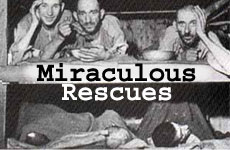


 Posts
Posts


